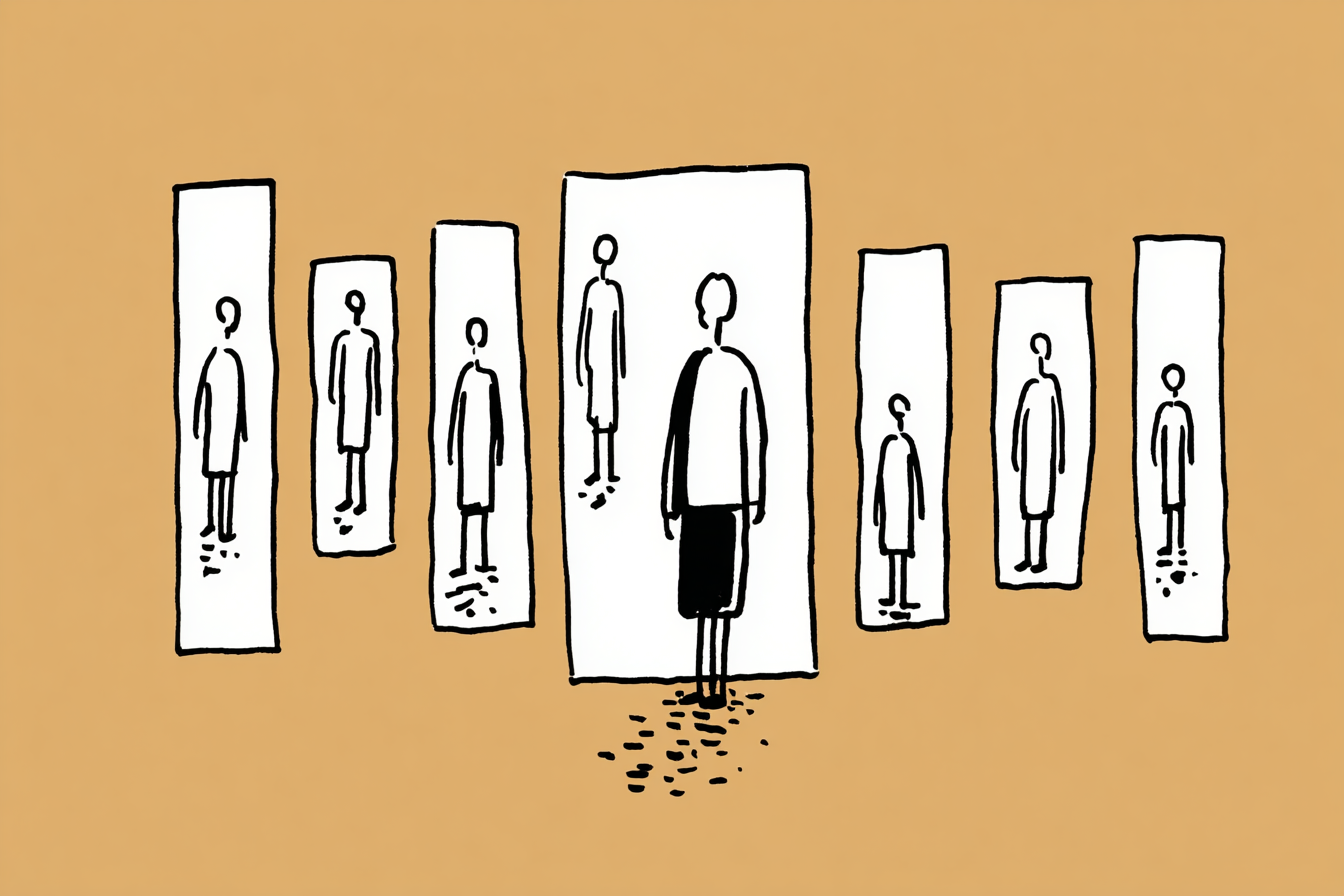
There is a fundamental mismatch at the center of hiring in 2026. The capabilities that matter most (whether a candidate can evaluate AI output critically, handle sensitive data appropriately, and exercise judgment about when to trust and when to override AI) are exactly the capabilities that traditional hiring methods cannot detect.
Resumes describe tools used, not judgment exercised. Interviews capture articulation, not verification behavior. Knowledge tests confirm recall, not application under pressure. And self-assessment is systematically inflated by AI use itself (Aalto University, 2026).
Scenario-based assessment was designed to close this gap. It works not because it is a clever test format, but because it solves a specific measurement problem: how do you observe what someone does with AI when all other evaluation methods only capture what they say about it?
The concept is not new. Situational judgment tests have been used in hiring for decades: in medicine, in military selection, in management assessment. What is new is the urgency. When 86% of hiring managers say AI makes it too easy to exaggerate skills (Express/Harris Poll, February 2026), and when AI proficiency appears on nearly every resume, the need for assessment methods that cut through self-presentation to observe actual behavior has never been greater.
What scenario-based assessment actually is
A scenario-based assessment, sometimes called a situational judgment test (SJT) in psychometric literature, presents a candidate with a realistic work situation and asks them to respond. Unlike a knowledge test, there is no single correct answer to memorize. Unlike an interview question, the candidate cannot rely on a rehearsed narrative. The scenario forces a decision, and the decision reveals judgment.
Meta-analytic research has consistently supported the validity of situational judgment tests for predicting workplace performance, with pooled validity estimates of .26 to .32 (Webster et al., 2020; McDaniel et al., 2007). Importantly, SJTs demonstrate incremental predictive validity beyond cognitive ability tests and personality assessments, capturing something that other methods miss. Sackett et al. (2022) found that many traditional predictors have lower operational validity than previously reported, reinforcing the need for assessment methods that directly simulate the judgments a role requires.
For AI readiness, the scenario-based approach is not just psychometrically sound; it is uniquely necessary. AI judgment cannot be measured through self-report because the people who lack it do not know they lack it. It cannot be measured through knowledge tests because knowing what a hallucination is and catching one in practice are different competencies. And it cannot be measured through interviews because the social incentives of an interview reward confident description over honest uncertainty.
Scenarios cut through all three limitations. They present the situation. The candidate responds. The response is scored.
What AI readiness scenarios look like
An AI readiness scenario is not an AI trivia question. It is a realistic professional situation in which the candidate must make a decision that reveals their judgment about AI-generated content, AI-related risks, or AI-appropriate use.
Here are examples across the five dimensions that Aptivum measures:
Fluency scenario. You need to prepare a competitive analysis for a client meeting tomorrow. You have access to AI tools and three hours of work time. What is your approach, and what would you check before presenting it?
This scenario tests whether the candidate uses AI productively (not whether they know what AI is), and critically, whether their approach includes verification. A candidate who describes generating the analysis and presenting it scores differently from a candidate who describes generating, verifying specific claims against primary sources, and flagging areas where AI output may be unreliable. The difference is invisible in any tool-usage question. It is visible in the scenario response.
Critical evaluation scenario. An AI-generated report includes a citation to a study from the National Bureau of Economic Research showing that remote workers are 23% more productive. You are about to forward this report to your team. What do you do?
The citation sounds plausible. The statistic is specific and authoritative. But the study may not exist. 38% of business executives have made decisions based on hallucinated AI output (Deloitte, 2024). The scenario tests whether the candidate's instinct is to verify the citation before forwarding, or to trust it because it sounds credible. This is the critical evaluation dimension in action, and it is the single most consequential dimension for professional risk.
Ethics and privacy scenario. You want to use AI to draft personalized rejection emails for candidates who did not advance past the interview stage. Your ATS contains their names, interview feedback, and salary expectations. How do you proceed?
The task is reasonable. The risk is in the data. 57% of enterprise employees have entered confidential information into public AI tools (TELUS Digital, 2025). The scenario reveals whether the candidate recognizes the privacy implications of entering interview feedback and salary data into an AI tool, whether they distinguish between company-approved and public AI platforms, and whether they can find a way to accomplish the task without compromising sensitive data.
Judgment scenario. Your manager asks you to use AI to summarize 50 customer complaints and identify the top three themes for a board presentation. The complaints contain customer names, account numbers, and descriptions of product failures. The board meeting is in two hours.
Time pressure and authority pressure are both present. The scenario tests whether the candidate prioritizes speed (entering the complaints directly into AI) or data sensitivity (anonymizing first, or using an approved internal tool, or pushing back on the timeline). This is judgment under realistic conditions, the kind of judgment that determines whether a hire becomes a data breach.
Collaboration scenario. You and a colleague are writing a joint report. Your colleague's section, which they tell you was drafted with AI assistance, contains several claims you are not sure about. The deadline is tomorrow. What do you do?
This scenario tests interpersonal AI judgment: how does the candidate navigate the social dynamics of questioning AI-assisted work? Do they verify independently? Do they raise the concern with their colleague? Do they let it go because the deadline is tight? The answer reveals collaboration judgment, a dimension that is invisible in any individual assessment but critical in team-based work.
See the gap for yourself
Take the free Aptivum Snapshot (10 questions, 8 minutes) and find out where you actually stand on AI readiness.
Why scenarios reveal what other methods cannot
The power of scenario-based assessment for AI readiness comes from three properties that other assessment methods lack.
Scenarios elicit behavior, not self-description. When a candidate answers the ethics scenario above, they are not describing what they would do in theory. They are demonstrating their pattern recognition in real time. Do they notice the data sensitivity issue? If so, how quickly? What is their instinct: to proceed, to pause, to ask a question? The response pattern reveals habitual judgment, which is far more predictive of on-the-job behavior than any interview answer.
Scenarios are resistant to AI-assisted preparation. A candidate can use ChatGPT to prepare for interview questions about AI ethics. They can memorize frameworks and rehearse structured answers. But a well-designed scenario presents a novel situation with multiple competing considerations: time pressure, authority pressure, data sensitivity, task completion. The candidate cannot simply recall a prepared answer. They must exercise judgment in the moment, and that judgment either exists or it does not.
This is not to say scenarios are impossible to game. Any assessment can be coached to some degree. But the coaching effect for situational judgment tests is substantially smaller than for knowledge tests or structured interviews, because the scenarios require the candidate to apply judgment to a novel situation rather than recall a known answer.
Scenarios produce multi-dimensional profiles, not single scores. A candidate who scores well on the fluency scenario but poorly on the ethics scenario is a fundamentally different hire from a candidate with the opposite profile. The first candidate uses AI productively but is a privacy risk. The second candidate is cautious with data but underutilizes AI tools. Both candidates might receive the same aggregate score on a general AI knowledge test. The scenario-based approach reveals the profile, and the profile is what determines role fit.
How to interpret scenario-based results
A common concern about scenario-based assessment is that responses feel subjective: how do you score a judgment call? The answer lies in rubric design, not in pretending that judgment has a single correct answer.
Effective AI readiness rubrics score responses across multiple dimensions, and within each dimension they distinguish between levels of sophistication. For the ethics scenario above, a strong response does not need to use the word "privacy" or cite a specific regulation. It needs to demonstrate that the candidate noticed the data sensitivity issue, considered the implications, and proposed a course of action that mitigates risk while still accomplishing the task.
The scoring distinction is between three levels: the candidate who does not notice the risk (low), the candidate who notices it but proceeds anyway (medium, awareness without action), and the candidate who notices it and adjusts their approach accordingly (high). Each level maps to a specific band in the AI readiness scoring framework, giving recruiters actionable information rather than abstract numbers.
In practice, this means a recruiter presenting results to a client can say: "This candidate scores Band B overall, with particular strength in critical evaluation and a development area in data privacy awareness. For a client-facing advisory role, they are a strong fit with a targeted onboarding recommendation for data handling protocols." That level of specificity is something no resume screen, no interview, and no general skills test can provide.
For HR managers assessing existing teams, the same scenario-based approach reveals where training investment will have the most impact. If 70% of a team scores Band C or below on the critical evaluation dimension, that is a specific, actionable finding, not a vague sense that "people need AI training." It points directly to the kind of training needed (verification protocols, source-checking habits) rather than generic AI literacy programs that may not address the actual gap.
This is also the level of documentation that the EU AI Act's Article 4 literacy requirements implicitly demand. With enforcement beginning August 2026, organizations need evidence that their staff have "sufficient" AI literacy proportionate to their roles. Scenario-based assessment results (dimension-specific, role-relevant, and documented) provide exactly the kind of evidence that a compliance audit would require.
Putting it together: from signal problem to signal solution
The signal problem in AI-era hiring (resumes that look polished because AI polished them, interviews that sound competent because AI coached them, self-assessments that are inflated because AI use inflates confidence) is not solved by detection. As we explored in our analysis of why spotting AI-enhanced resumes is the wrong approach, trying to identify which inputs are AI-generated misses the point entirely.
Scenario-based assessment bypasses the signal problem by measuring what matters directly. It does not ask whether the candidate used AI to prepare. It does not care. It presents a situation, observes a response, and evaluates whether that response reflects the kind of judgment that produces reliable professional outcomes when working with AI.
The signal problem will intensify as AI tools improve. The solution will not come from better detection. It will come from better measurement: assessment methods designed specifically for the capabilities that AI has made both more important and harder to observe.
For a deeper exploration of how scenario-based scores translate to actionable hiring insights, see AI readiness scores explained: what bands A through F actually mean.
See how scenario-based assessment works in practice. Take the free Aptivum Snapshot: eight minutes, five dimensions. Experience the assessment that reveals what resumes cannot.