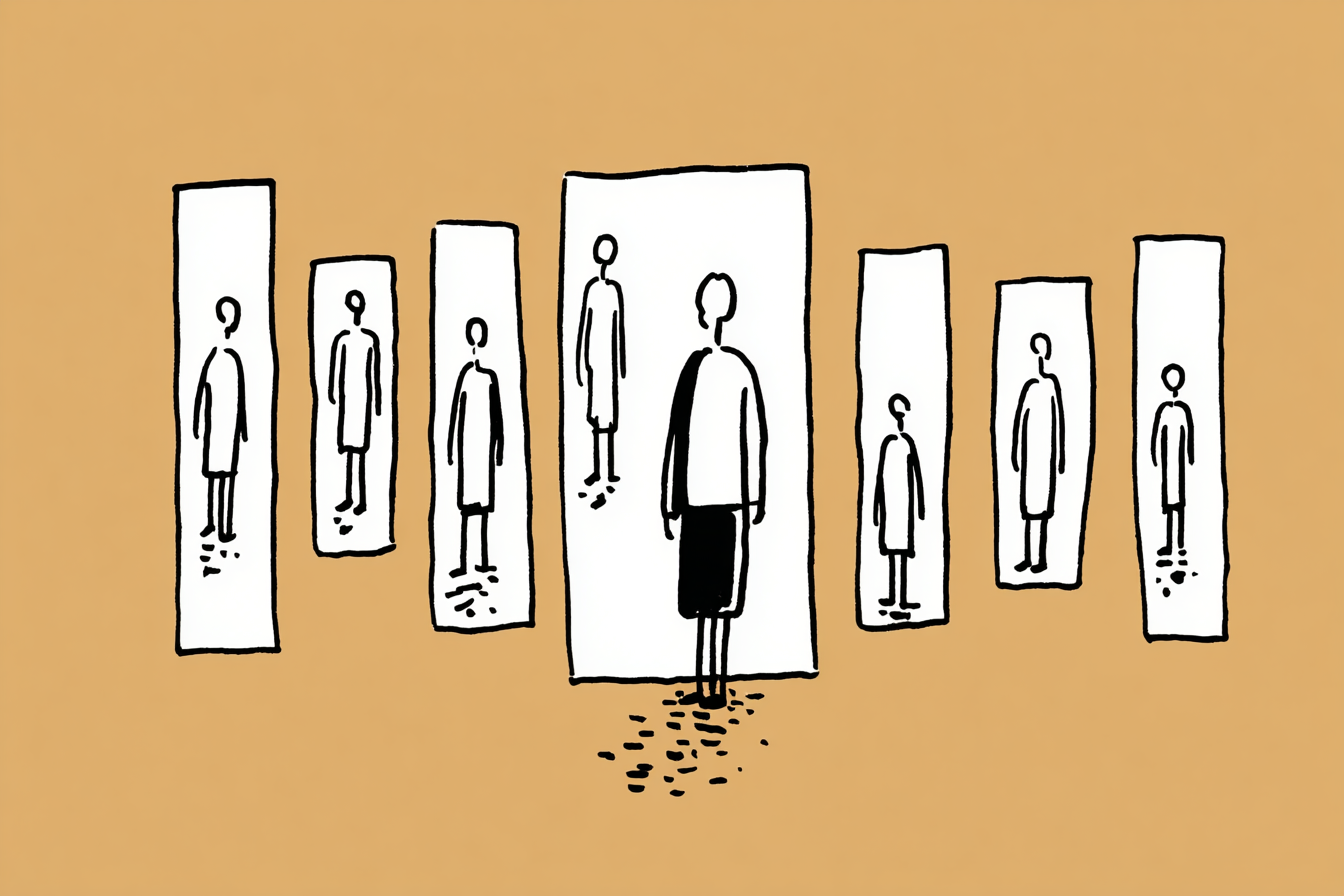
Here is a number that should make every recruiter uncomfortable: 86% of U.S. hiring managers say AI makes it too easy to exaggerate skills on resumes (Express Employment/Harris Poll, February 2026). 80% say candidates' resumes do not match their real-world skills at least sometimes. And 94% of hiring managers have encountered misleading AI-generated content from candidates (Resume Now, 2025).
Meanwhile, AI proficiency is showing up on nearly every resume. Candidates list ChatGPT, prompt engineering, and "AI tools" in their skills sections. They describe AI-related projects in their experience. They present work samples that are polished, fluent, and confident.
The problem is not that candidates are lying. The problem is that AI has made it structurally easier to appear competent than to be competent, and the traditional tools recruiters use to evaluate candidates were not designed for a world where that distinction is this hard to see.
The signal problem
Recruitment has always been a signal-reading exercise. Resumes signal experience. Interviews signal communication and thinking. References signal reliability. Skills tests signal competence. The recruiter's job is to read these signals and make a judgment about whether a candidate can do the work.
AI has broken this system, not by eliminating signals, but by making them unreliable.
A resume generated or enhanced by AI reads well. The formatting is clean, the language is polished, the keywords are present. But the resume tells you what AI can produce, not what the candidate can do. 80% of hiring managers already recognize this disconnect: resumes do not match real-world skills. Yet most hiring processes still begin with resume screening.
An interview answer prepared with AI coaching sounds articulate. The candidate has anticipated the questions, rehearsed structured responses, and internalized the frameworks. But the answer tells you what AI-assisted preparation looks like, not whether the candidate has the judgment to handle the actual situations described.
A work sample produced with AI assistance is competent. The analysis is structured, the writing is clear, the conclusions are reasonable. But the sample tells you what AI can generate when given the right prompt, not whether the candidate can evaluate whether the output is accurate, complete, or appropriate for the context.
This is what we call the signal problem: the traditional signals recruiters rely on have been inflated by AI to the point where they no longer differentiate candidates on the dimension that matters most: whether they can actually work with AI effectively, critically, and with sound judgment.
What the data shows
The gap between claimed AI skills and actual AI readiness is not a perception problem. It is a measurable, documented phenomenon.
Overconfidence is the norm, not the exception. Research from Aalto University (2026) found that the more people use AI, the more they overestimate their own abilities. This is not an intuitive finding. You would expect experience to calibrate self-assessment. Instead, AI use creates a confidence inflation effect. People who use AI regularly become more certain of their competence, not less, even when their actual performance does not improve proportionally.
AI users skip verification at alarming rates. 38% of business executives have made decisions based on hallucinated AI output (Deloitte, 2024). 47% of enterprise AI users have made at least one major business decision based on fabricated content. These are not junior employees. They are experienced professionals who assumed AI output was accurate because it sounded authoritative.
Sensitive data enters public AI tools routinely. 57% of enterprise employees have entered confidential information into public AI tools (TELUS Digital, 2025). 68% access AI through personal accounts rather than company-approved platforms. Only 24% work at organizations with mandatory AI training.
The resume-reality gap is widening. 86% of hiring managers believe AI makes it too easy to embellish resumes. 42% strongly agree that AI-enhanced resume exaggeration is becoming a serious hiring risk. Yet only 22% of job seekers admit to listing skills they do not actually have, suggesting that the gap between self-perception and employer perception is itself a signal problem.
Training has not kept pace with adoption. 72% of employees want to improve their AI skills, but only 32% have received any formal training (BambooHR, 2025). 55% use AI at least weekly, but less than 3% have progressed beyond basic prompting (Section AI, 2026). The gap is not between AI users and non-users. It is between basic AI use and the kind of critical, ethical, judgment-driven AI use that produces reliable professional outcomes.
See the gap for yourself
Take the free Aptivum Snapshot (10 questions, 8 minutes) and find out where you actually stand on AI readiness.
Why traditional evaluation fails
The signal problem would not matter if standard hiring processes could detect it. They cannot, and the failure is structural, not a matter of execution.
Resume screening cannot distinguish AI-generated polish from AI readiness. A resume tells you nothing about whether a candidate verifies AI output, handles sensitive data appropriately, or adjusts their AI reliance based on stakes. The better AI gets at producing resumes, the less information resumes contain about the candidate.
Interviews reward articulation, not verification behavior. A candidate who gives a fluent, structured answer about how they use AI in their work may have rehearsed that answer using AI. The interview reveals communication skill. It does not reveal whether the candidate, in practice, checks AI-generated claims before sending them to a client.
Knowledge tests measure recall, not judgment. A candidate who can define "hallucination" and list five AI tools has knowledge. They may still accept hallucinated content at face value in their actual work, because the test never put them in a situation where they had to demonstrate the behavior under realistic conditions.
Self-assessment is systematically unreliable. Given the Aalto University finding that AI use inflates self-confidence, any hiring process that relies on candidates' self-reported AI proficiency is measuring confidence, not competence. The most overconfident candidates will rate themselves highest, and overconfidence in AI is a risk factor, not an asset.
Reference checks do not cover AI behavior. Previous managers may confirm that a candidate "used AI tools effectively," but they may not have had visibility into whether the candidate verified AI output, handled data appropriately, or exercised judgment under pressure. AI-related risks are often invisible to colleagues and supervisors until something goes wrong.
The signal problem is not solved by doing traditional evaluation better. It is solved by evaluating a different dimension entirely.
What actually works: measuring behavior, not claims
The gap between claimed AI skills and actual AI readiness can only be closed by assessment methods that measure what candidates do, not what they say they can do. This requires three shifts.
From knowledge to scenarios. Instead of asking "what is a hallucination?", put the candidate in front of an AI-generated document that contains plausible but fabricated claims. Do they spot them? Do they verify? Do they know how to verify? The scenario reveals behavior. The knowledge question reveals recall.
From generic to contextual. Instead of a standardized AI skills test, present scenarios tied to the specific risks the role involves. A candidate for a client-facing advisory role needs to demonstrate that they will not send unverified AI-generated analysis to a client. A candidate for an internal operations role needs to demonstrate that they will not enter sensitive employee data into a public AI tool. Same underlying competency, but different context, different scenarios, different evaluation criteria.
From single scores to profiles. AI readiness is not a single dimension. A candidate with high AI fluency and low critical evaluation is a different hire from a candidate with moderate fluency and strong ethical reasoning. Aggregate scores flatten this distinction. A multi-dimensional profile, measuring fluency, critical evaluation, ethics, judgment, and collaboration separately, gives you the information to match candidates to roles instead of ranking them on a single axis. For a detailed framework on what to measure and how, see how to measure AI readiness in job candidates.
Consider two candidates, both claiming "advanced AI proficiency" on their resumes. Candidate A uses AI tools fluently, generates polished output quickly, but accepts AI-generated claims without verification and does not think twice about entering client data into a public tool. Candidate B is slower with AI tools, more deliberate in their prompting, but systematically verifies every claim and has an instinctive awareness of what data should never enter an AI system. A resume screen sees two equally strong AI candidates. A knowledge test may score them similarly. A scenario-based profile reveals that Candidate A is a compliance risk in any client-facing role, while Candidate B is exactly who you want handling sensitive advisory work, despite the less impressive resume.
For a deeper explanation of scenario-based assessment and why it works, see beyond the resume: how scenario-based assessment reveals real AI judgment.
The recruiter's role in closing the gap
The signal problem is not candidates' fault. AI tools are powerful, accessible, and designed to make output look polished. Candidates are rational to use them. The signal problem is a market condition, and it creates both risk and opportunity for recruiters.
The risk is obvious: placing a candidate who claims AI proficiency but lacks AI judgment. The candidate sends a hallucinated analysis to a client. They enter confidential data into a public AI tool. They make a recommendation based on unverified AI output. The placement fails, and the failure reflects on the recruiter who made it.
The opportunity is equally clear: recruiters who can distinguish between claimed and actual AI readiness provide a service that clients cannot get anywhere else. When every resume looks AI-polished and every candidate claims AI skills, the recruiter who can say "this candidate scores Band B in AI readiness, with particular strength in critical evaluation and a development area in ethics" is adding value that no ATS, no interview, and no resume screen can replicate.
The gap between what candidates claim and what they can actually do is the defining challenge of recruitment in 2026. It is also the defining opportunity.
This is not a temporary problem that will resolve itself. As AI tools improve, the gap between appearance and capability will widen, not narrow. Better AI produces more polished resumes, more articulate interview answers, and more impressive work samples, making the signal problem harder to detect through conventional means. The recruiters who invest in measurement methods that cut through this noise will not just avoid bad placements. They will build a competitive advantage that compounds as the signal problem grows.
For more on what makes AI-enhanced resumes unreliable as a signal and why detecting them is the wrong focus, see how to spot an AI-enhanced resume (and why it doesn't matter).
See the gap for yourself. Take the free Aptivum Snapshot: eight minutes, five dimensions. Find out where you actually stand.